











How to Remove Scratches from Car Paint — Why the Answer Is Never Simple
7 min read
“How do I remove scratches from my car?” and “What product should I use to remove scratches?” — these are two of the most common questions we get. And the honest answer to both of them is the same: it depends. Not because we’re avoiding the question, but because scratches are not all the same thing, and the process of removing them is not as simple as choosing the right compound and rubbing.
Most people asking these questions imagine that scratch removal is a product problem. Find the right compound, apply it to the paint, and the scratch disappears. Others think it comes down to brand — the right pad, the right machine, the right name on the bottle. This idea gets repeated everywhere, and it’s not entirely wrong. Compound is used to remove scratches. But that’s only part of the story, and treating it as the whole story is exactly why so many people end up frustrated.
What Even Is a Scratch? #
Before anything else, it helps to understand what a scratch actually is — because the way most people think about it makes the whole process harder to understand.
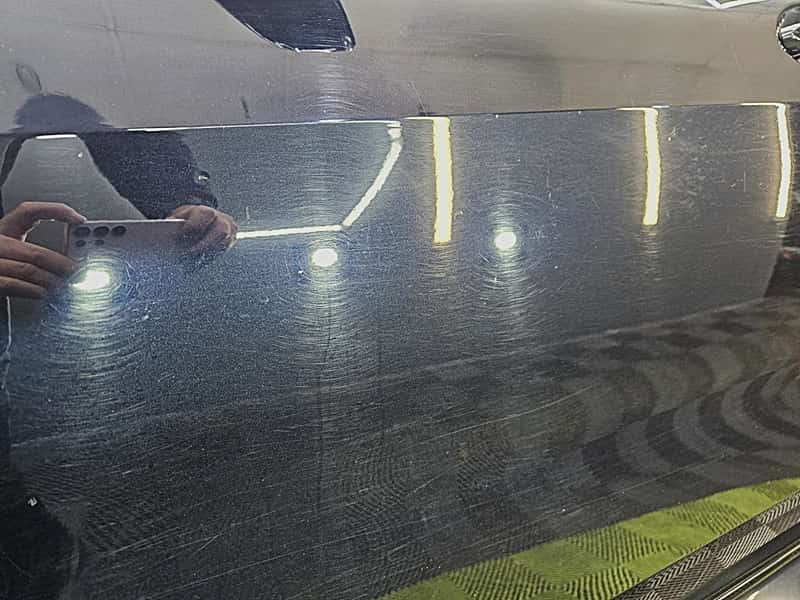
A scratch looks like something that’s been added to the paint. A line, a mark, something visible sitting on the surface. But that’s not what it is. A scratch is not something that appeared on the paint. It’s something that was removed from it — damaged, displaced clear coat. The scratch you see is the absence of intact paint in that area.

This matters because it changes how you think about removal. You are not removing a scratch. You are removing the damaged paint around it — levelling the surrounding clear coat down to the depth of the damage until the surface is even again and the defect disappears. The scratch doesn’t get taken away. The paint around it gets brought down to meet it.
What Type of Scratch Are You Actually Dealing With? #
Not all scratches are the same, and the type determines everything — whether removal is possible, what process is needed, and how long it will take.
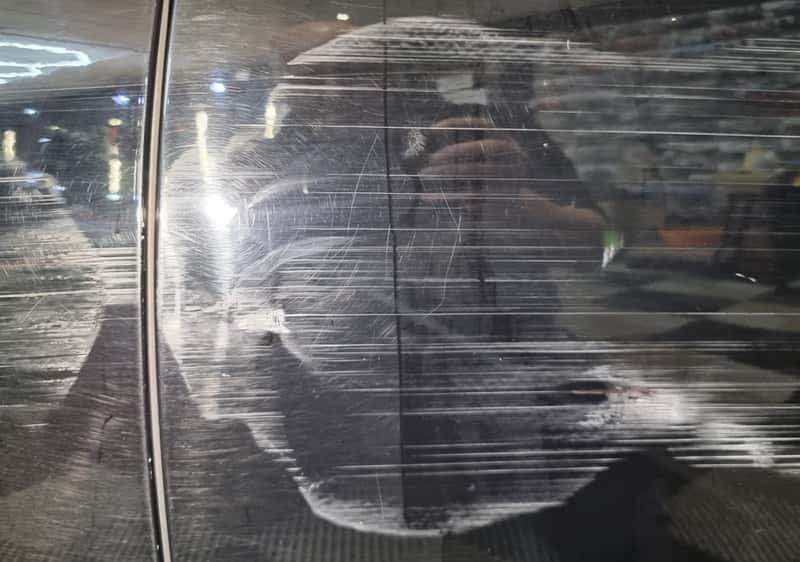
At one end you have holograms, buffer trails, and light wash marks — surface-level defects sitting in the upper layer of clear coat, correctable in almost every case. Then swirl marks from washing — very common, very correctable. Slightly deeper are scratches from branches or general contact. At the other end are deep scratches from keys or vandalism. These are a completely different situation.
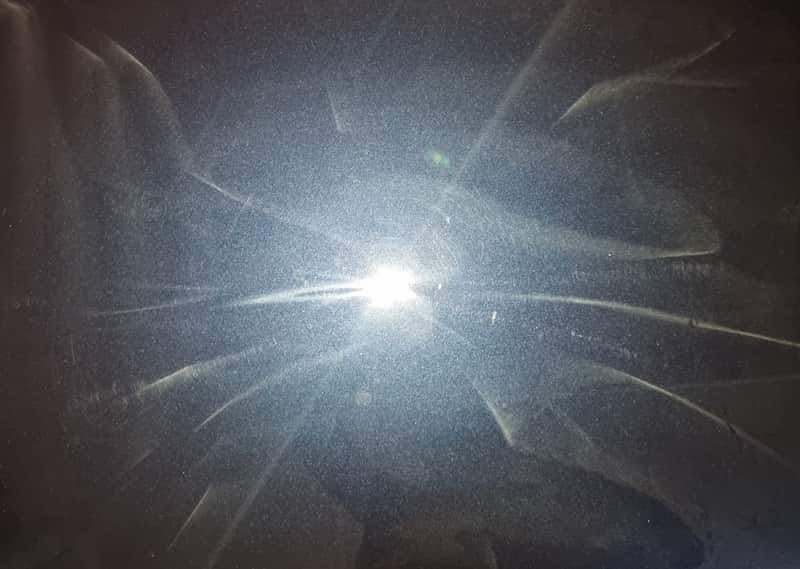
Knowing which category you’re dealing with before you start is not optional.
Which Scratches Can Actually Be Removed — And Which Can’t? #
Paint on most cars consists of three layers: primer, base coat, and clear coat. The clear coat is the transparent top layer — the one that takes the majority of surface damage.
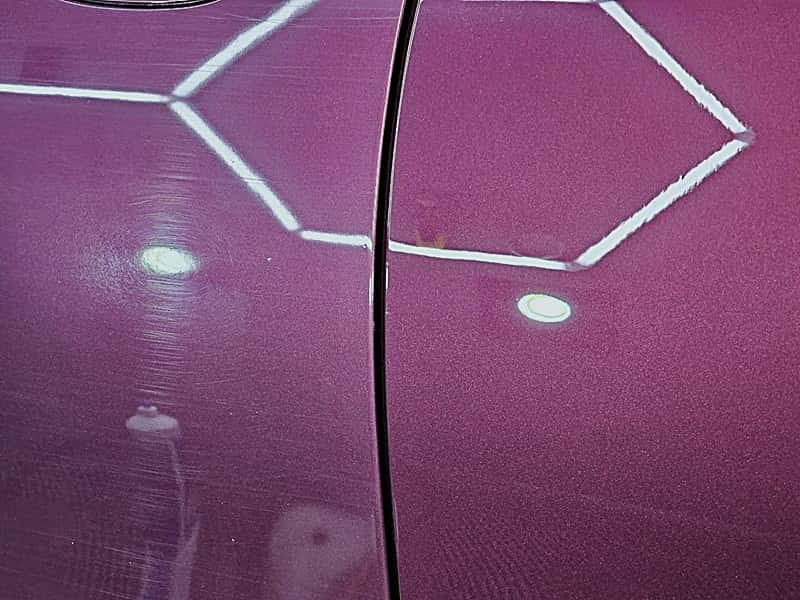
Scratches can only be corrected if they are within the clear coat. If the damage goes through the clear coat and into the base coat or primer, polishing will not remove it. Swirl marks and holograms are in almost every case within the clear coat — that’s why they’re correctable. Deep vandal scratches are a different story. If the scratch cannot be removed, the only option is filling it. This can sometimes improve the appearance, but it won’t restore the paint to factory condition.
How Do You Know If a Scratch Is Deep Enough to Remove? #
Two methods. Use both.
The first is the fingernail test. Run your fingernail lightly across the scratch at a right angle. If your nail catches — if there’s a physical edge you can feel — the damage is likely too deep for polishing to correct completely. Total paint thickness on most cars is around 100 to 120 microns, roughly 1/10 of a millimetre. If you can feel a depression at that scale, the scratch is probably beyond what polishing can fix.
The second is the water test. Clear coat is transparent. Pour water over the scratched area — if the scratch disappears when wet and returns as it dries, it’s within the clear coat and correctable. If it remains visible on a wet surface, the damage goes deeper. The same applies to stone chips — they’re always visible on a wet car because in those areas the clear coat is already gone.
How Are Scratches Actually Removed? #
Through polishing — controlled abrasion that removes the damaged layer of clear coat until the surface is level again.
Three things are required: motion from a polishing machine, abrasion from the compound and pad, and lubrication from the compound. All three have to work together. Technically, scratches can also be removed by hand — it’s still motion, abrasion and lubrication. But it takes so long that most people assume it isn’t working. As the saying goes, dripping water can carve rock. Hand polishing can remove scratches — it’s just rarely a practical solution.
In real correction work, a machine is used because it delivers consistent, controlled motion at a speed that makes the process efficient. But the machine alone isn’t enough — the combination has to be matched to the paint.
How Do You Choose the Right Combination? #
Paint hardness varies significantly between manufacturers and models. Hard paint resists abrasion and requires a more aggressive combination to cut effectively. Soft paint responds faster but needs more control. The only reliable way to find the right combination is a panel test.
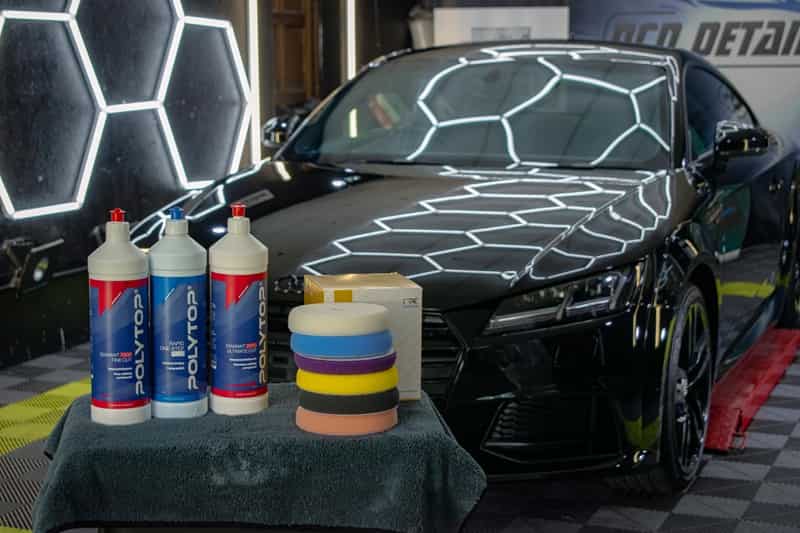
Work a small area — roughly three to four times the size of your pad — using your machine correctly for the type you’re using, whether that’s a dual action, gear driven, or rotary. Then evaluate what happened.
If the combination is removing defects at the right rate with a clean finish — that’s your combination. If it’s barely doing anything, you need more aggressiveness — either a more aggressive compound, a more aggressive pad, or both. If it’s correcting well but leaving a heavy mess that’s hard to refine, the combination is too aggressive — reduce it, or adjust how you’re working.
This is how you find the right setup. Not by guessing, not by following a general recommendation online — by testing on the actual paint in front of you.
If a compound isn’t working, in most cases it’s not because the product is bad. It’s either that the machine isn’t being used correctly, or the combination isn’t right for the paint hardness. Some people believe that a medium or finishing compound can’t remove swirl marks — that’s not accurate. On soft paint it will. On hard paint it will be extremely slow — slow enough to feel like it isn’t working at all. That’s not the compound failing. That’s the wrong combination for the surface.
The Bottom Line #
Scratch removal is a process, not a product. The compound matters, the pad matters, the machine matters — but correct use of all three together is what makes the difference. Proper technique with the right combination matched to the paint is what delivers effective, efficient correction.
Identify the type of damage. Check whether it can be corrected. Match the combination to the paint through a panel test. Use the machine correctly.
Do all of that, and the question of which compound to use almost answers itself.
Related Articles:
Panel Wipe and Inspection Light — The step most beginners skip before applying any protection.
Have a question or something to add? Drop a comment below — whether it’s a question, your own experience, or something you’d do differently. We read everything.


Leave a Reply
You must be logged in to post a comment.

Leave a Reply #