










Prewash in a maintenance wash – what matters
5 min read
How maintenance prewash differs from decontamination prewash? Prewash during a maintenance wash is a completely different situation compared to full decontamination. We are not removing tar or heavy contamination here — we focus on regular washing of the car. In many cases, we also work on protected cars (coatings, waxes, sealants), so the goal is not to strip or weaken the protection, but at the same time to clean the car effectively without touching the paint. Prewash is what largely determines whether a car will look good for years and how long the protection will actually last.
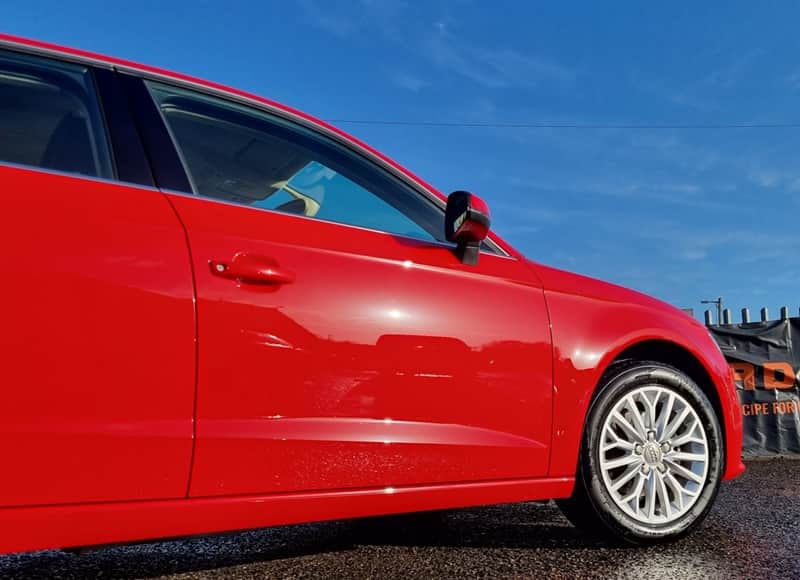
Purpose of maintenance prewash: The goal of prewash is to remove as much — ideally all — traffic film and general dirt from the car. This ensures that during contact wash you are not dragging dirt across the paint and creating scratches. To perform proper prewash you need:
- a pressure washer
- a foam cannon or pump sprayer
- ideally two types of products:
- a gentle prewash (e.g. ADBL Yeti / Cleantle Citrus Foam)
- a stronger prewash (e.g. ADBL TFR / Cleantle TFR)
Prewash on protected cars – what you need to know #
Prewash should be safe for coatings, waxes and sealants — but still effective enough to remove dirt. Safety vs effectiveness – what matters more? A lot of people make one basic mistake — they focus only on keeping prewash “safe” for the protection and they only use ph neutral products to keep the coating safe. And that’s a mistake.
The most important thing is simple: 👉 does your prewash actually remove dirt? If it doesn’t:
You leave contamination on the paint, you move to contact wash and you start rubbing that dirt across the surface in result scratching the paint. Which is exactly what you want to avoid.
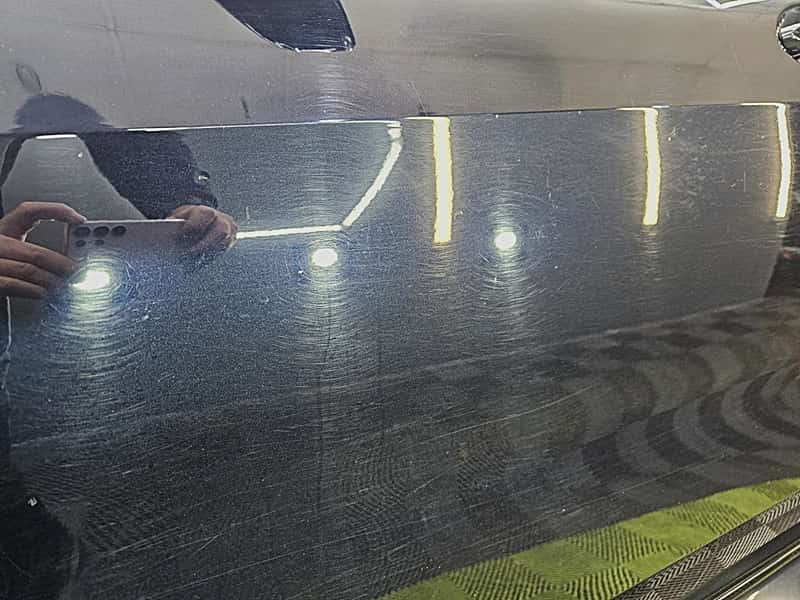
Most people, when asked, will say they wash their car properly, but for some reason their car gets swirly….
The problem is — a correct and incorrect prewash can look similiar at first glance. So here is what happens:
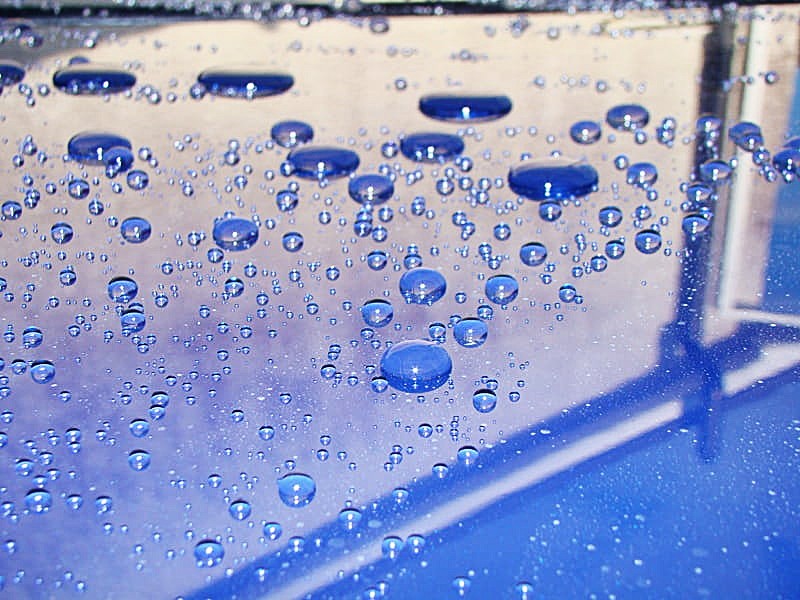
Think about what happens during rain. Almost all cars — especially dark ones — look clean. Why? Because they are wet. The exact same “rain effect” happens during washing. When the car is wet, dirt becomes invisible. In reality, it imay be sill there, if you dont pay a lot of attention the chance is huge that even after your prewash the car is still dirty. And that leads to washing “by eye”, instead of actually cleaning the car.
👉 My approach: if I’m working on a dirty or very dirty car, I would never trust only what I can see. One bad contact wash can cause a lot of damage to the paint, so I want to eliminate that risk. I would rather slightly weaken the protection and clean the car properly by using a stronger prewash, than “protect the coating” and end up scratching the paint during contact wash. Because:
- protection can always be topped up ( easy job)
- scratched paint needs polishing ( time consuming)
What a proper maintenance prewash should look like #
Heavily dirty car
Start by rinsing the car with water from the bottom up. Rinsing from the bottom up is key — it gives you full control over what has been cleaned. Rinsing from the top creates the “rain effect”, which hides dirt and makes you clean lower sections blindly. This removes the heaviest dirt and makes the process safer. The car will be wet, which slightly reduces chemical strength, but wet dirt becomes much easier to remove once prewash is applied. Then apply a stronger prewash: e.g. Cleantle TFR — stronger but still balanced (pH 8 in concentrate)
at 1:15-1:20 dilution it is safe for waxes and coatings
at 1:10 it may slightly weaken protection, but will not damage it (unlike high pH TFRs)
Apply it to the lower sections of the car using a sprayer — where most of the dirt sits. After 2-3 minutes, apply neutral foam over the entire car: eg. Cleantle Citrus Foam or ADBL Yeti ( PH neutral). Upper sections are usually not heavily contaminated — foam is enough.Allow products to dwell for 5-7 minutes. Do not let them dry. If they start drying, reapply product to extend working time. Then rinse the car thoroughly. At this stage rinsing from the top will be effective enough as the heavy dirt was removed within the first rinse. After this stage, the car is ready for safe contact wash.
Lightly dirty car (good condition)
If the car is in good condition and only lightly dusty, you can skip the initial rinse and apply a neutral prewash onto dry paint. If its only light fresh dirt it should be effective enough, but proper rinsing from the bottom up is still critical — slowly and with control. For 99.99% safety, a two-step approach is still recommended: first rinse with water, second stage: prewash + rinse. On very soft paints, this is often the only correct approach. On harder paints (e.g. many German cars), the risk of scratching is lower, so a single prewash may be enough on relatively clean cars.
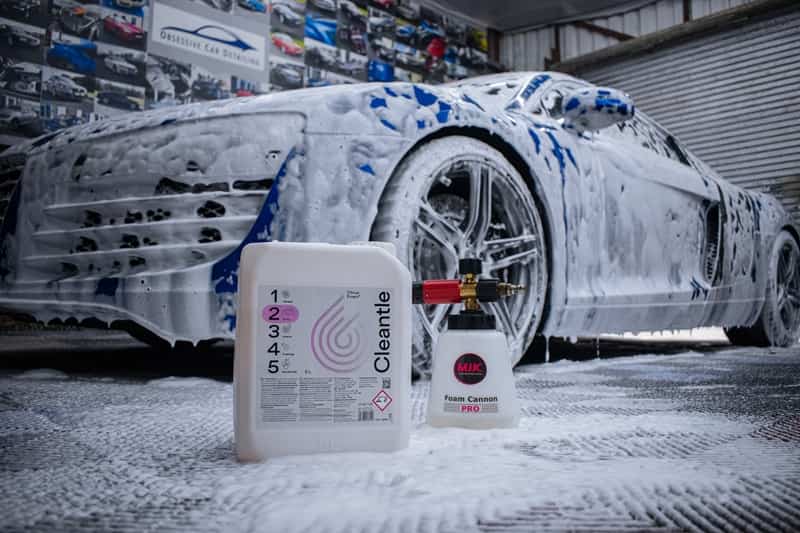
Choosing the right prewash products. What we use #
Product choice should always depend on the level of contamination — not on what you have available. Light contamination / regular washes:
Cleantle Citrus Foam ( PH Neutral)
ADBL Yeti (PH Neutral)
Heavier contamination:
Cleantle TFR Prewash (safe but effective – pH 8 concentrated )
ADBL TFR ( PH 12 concentrated )
It’s not about using the strongest product every time. It’s about using the right product for the level of dirt.
In summer, cars get less dirty — neutral prewash is usually enough if you wash regularly (every 1-2 weeks). In winter, cars should be washed more frequently (around once a week with daily use), and stronger prewash is often required.
Foam cannon vs pump sprayer – what’s the difference? #
Many people use foam cannons because foam looks good. And they are great solution that we use every day, But here’s an important point and a little tip for those really heavy tasks :
Prewash applied with a foam cannon is always weaker than the same product used in a pump sprayer — even at the same dilution. Why?
a sprayer delivers the exact concentration you mix
a foam cannon further dilutes the product with water and air
So in reality, a weaker solution reaches the car. This is especially important on heavily contaminated vehicles.
How to know if your prewash actually works #
After prewash, the car should be actually clean — not just look clean. You can:
- let the car dry and check the result, when the car will be dry you will clearly see
- or wipe small lower sections of the car with a clean, light microfiber – you will know starigh away
If the cloth stays clean — you’re doing it right.
If it picks up dirt — you’re still leaving contamination behind and risking scratches during contact wash.
Maintenance prewash is not about spraying foam for visual effect. It is the stage that determines whether: you maintain the car properly or slowly destroy it with every wash
👉 It’s better and easier to top up the protection than to correct paint.
Understand this — and your washing process will go to a completely different level.
Have a question or something to add? Drop a comment below — whether it’s a question, your own experience, or something you’d do differently. We read everything.


Leave a Reply
You must be logged in to post a comment.

Leave a Reply #