











How to Apply a Ceramic Coating: A Complete Beginner’s Guide

How to Apply a Ceramic Coating?
Written by OCD Detailing — 15 Years of Real Industry Experience in Ireland
How to Apply Ceramic Coating ? Ceramic coatings have become incredibly popular among both professional detailers and hobbyists who want long-lasting paint protection without monthly waxing. But before you reach for the applicator, there’s one rule you must understand: a ceramic coating will only look as good as the paint underneath it. Preparation is 80% of the final result. No coating can hide swirls, holograms, oxidation, or poor prep. In this guide, we walk you through the entire process — from preparation and paint correction to applying AQUA One, a coating that’s especially beginner-friendly.
1. Proper Preparation — The Foundation of Every Ceramic Coating Job
Preparation is the most important part of any coating application. If the foundation is weak, the final result will be disappointing no matter how good the product is. Correct prep removes dirt, bonded contamination, oils, road film, and anything else that would interfere with bonding. A well-prepared surface ensures gloss, slickness, durability, and clean curing. When the prep is done correctly, the coating can perform at its full potential — when it’s done poorly, no coating will save the finish.
1.1 Pre-Wash — Removing Dirt Before Touching the Paint
The goal of a proper pre-wash is to remove as much contamination as possible without physically touching the paint. Start with a snow foam or citrus pre-wash to break down grime, then rinse thoroughly with pressure. Only after this should you proceed with a safe contact wash using the two-bucket method. This drastically reduces the risk of adding new swirls and makes the rest of the process safer and more effective. A clean starting point equals a cleaner coating installation.
1.2 Chemical Decontamination — Iron, Tar, and Adhesive Removal
Before thinking about clay or polishing, you must chemically remove bonded contaminants. Use an iron remover to dissolve embedded metal particles, followed by a tar remover for asphalt spots and traffic film. If needed, a glue remover can take care of adhesive residue. Skipping this step leads to dragging contaminants across the paint during claying or polishing, which can create defects. A chemically clean surface is essential for proper polishing and eventual coating adhesion.
1.3 Mechanical Decontamination — Using a Clay Bar
Clay removes what chemicals cannot — tiny bonded particles that ruin gloss and interfere with a smooth finish. After claying, the surface should feel clean, smooth, and ready for machine polishing. This step sets the stage for achieving a flawless finish before applying a ceramic coating. If the paint isn’t smooth at this point, the coating won’t bond well and the car won’t achieve that deep ceramic gloss beginners expect.
2. Machine Polishing — Full or One-Step, Depending on Paint Condition
One of the biggest beginner questions is: “Do I need to polish before applying a ceramic coating?”
The answer is yes. Even a simple one-step correction dramatically improves results. A coating does not hide defects — it actually enhances whatever is already there. Swirls become glossier swirls. Holograms become shinier holograms. But properly polished paint turns into a true mirror finish once coated. This is something we explain to every client and every trainee at OCD Detailing: polishing determines the final look, not the coating itself.
3. Panel Wipe — Creating a Perfect Surface for
After polishing, the paint still contains oils from the compounds. These oils will prevent proper bonding if not removed. A dedicated panel wipe ensures the surface is clean, bare, and ready for the ceramic coating. Work panel by panel and wipe evenly to avoid streaks. When the paint is fully degreased, the coating can anchor directly to the clear coat, improving durability, gloss, water behaviour, and overall performance.
4. Applying AQUA One — The Ideal Ceramic Coating for Beginners
Not all coatings are beginner-friendly. Some flash extremely fast, leaving little room for mistakes. AQUA One, on the other hand, offers a long working time and smooth application, making it perfect for users learning the process. One of its biggest advantages is the extended wipe-off window — you can still correctly remove the coating even 20–30 minutes after applying it to the entire car. This gives beginners confidence and eliminates the stress of racing against the clock.
5. How to Apply Ceramic Coating .
AQUA One — Step-by-Step Instructions
Applying a coating becomes much easier when broken down into simple steps. The key is consistency and patience, not rushing the process. AQUA One allows you to work calmly and methodically, making it one of the best coatings for training and home use.

5.1 Work Panel by Panel for Complete Control
Working panel by panel ensures you cover the entire car without missing sections or losing track of where the coating has been applied. It also allows consistent dotting, overlapping, checking, and wiping. Follow a logical order: bonnet, wings, doors, roof, rear quarters, bumpers. Treat each panel as its own mini-project. This method guarantees better results, easier wipe-off, and fewer mistakes — especially for first-time users.
5.2 Applying the Coating — Even Coverage Without Excess
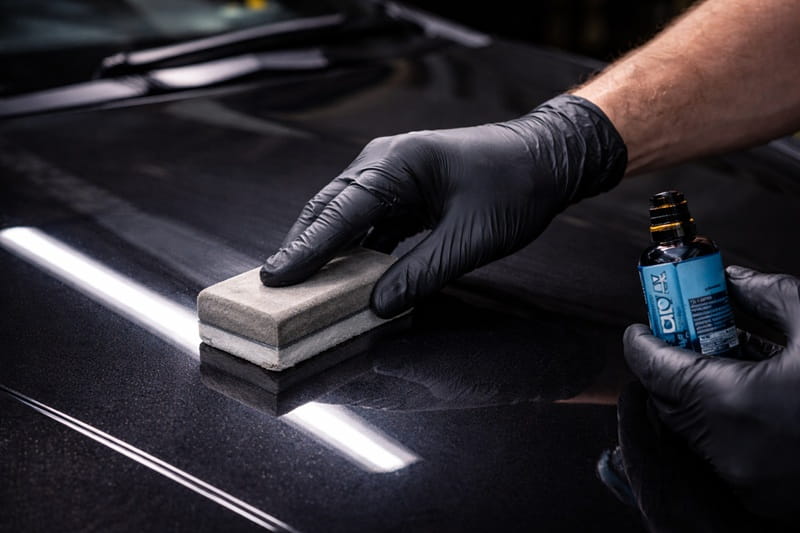
Use the applicator and suede cloth provided. Apply a few drops of AQUA One and spread it evenly using a crosshatch pattern (up-down, left-right). The surface should look lightly “oiled” but not flooded. Too much product leads to streaks and extended curing problems. A controlled, even layer produces a clean bond and a smooth finish. This part is easy — the real magic comes during the removal stage.
5.3 Wiping Off — The Most Important Step (After ~5 Minutes)
Wait around five minutes after application, then begin your wipe-off. Always use two microfibres of different colours to avoid cross-contamination.
• Towel 1 removes excess coating
• Towel 2 perfects the finish and eliminates micro-streaks
This two-towel system is the safest and most consistent method, especially for beginners. AQUA One’s long open time gives you plenty of room to correct the surface without panic or rushing.
5.4 Inspecting with a Detailing Light — Spot Every Imperfection
After wiping a panel, always inspect it using a strong detailing light. Check from different angles to spot smears, oily patches, streaks, or missed areas. High-quality inspection lighting reveals what normal workshop lighting won’t show. This step prevents bonding issues and ensures the final results look clean, glossy, and professional. A coating can only cure properly if the surface is perfectly levelled and residue-free.
6. Final Check Outside — Natural Light Shows Everything
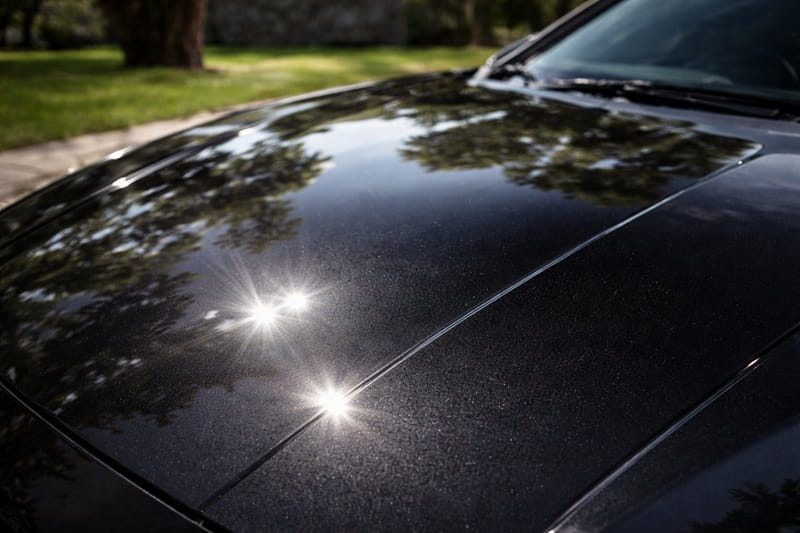
Once the entire car is coated and wiped, take it outside for a natural-light inspection. Avoid direct sunlight — diffused daylight is more revealing and makes it easier to spot high spots and streaks. Look for dark patches, uneven reflections, or dull areas. If you see anything, remove it immediately. At this stage, the coating can still be corrected easily, and proper levelling ensures an even, long-lasting finish.
7. Most Common Beginner Mistakes — And How to Avoid Them
Beginners often struggle with the same issues: working on huge sections at once, using too much product, wiping with only one towel, skipping inspection lighting, or applying a coating on poorly prepped paint. All these mistakes lead to streaks, high spots, or inconsistent curing. AQUA One is forgiving, but it cannot overcome weak preparation or neglect. Following the proper steps guarantees success even for first-time users.
8. How Long Does a Full Ceramic Coating Application Take?
Time varies depending on experience and paint condition. Beginners usually need:
• 2–4 hours for full preparation
• varied time for polishing depending on paint condition and skill
• 1–1.5 hours for coating application
• plus inspection, levelling, and curing
Altogether, a realistic total for a beginner is around 10–15–20 hours from start to finish. Perfection takes time — and the results make it worth it.
9. Summary —
A perfect ceramic coating result requires a structured and careful process:
• Proper pre-wash and decontamination
• Machine polishing suited to the paint
• Full panel wipe to remove oils
• Controlled application panel by panel
• Two-towel wipe-off for a flawless finish
• Inspection under lighting and natural daylight
AQUA One allows beginners to learn the correct method without stress thanks to its long working time and forgiving application behaviour. It’s the same coating we use during our beginners training courses at OCD Detailing — because it teaches technique, not panic.
